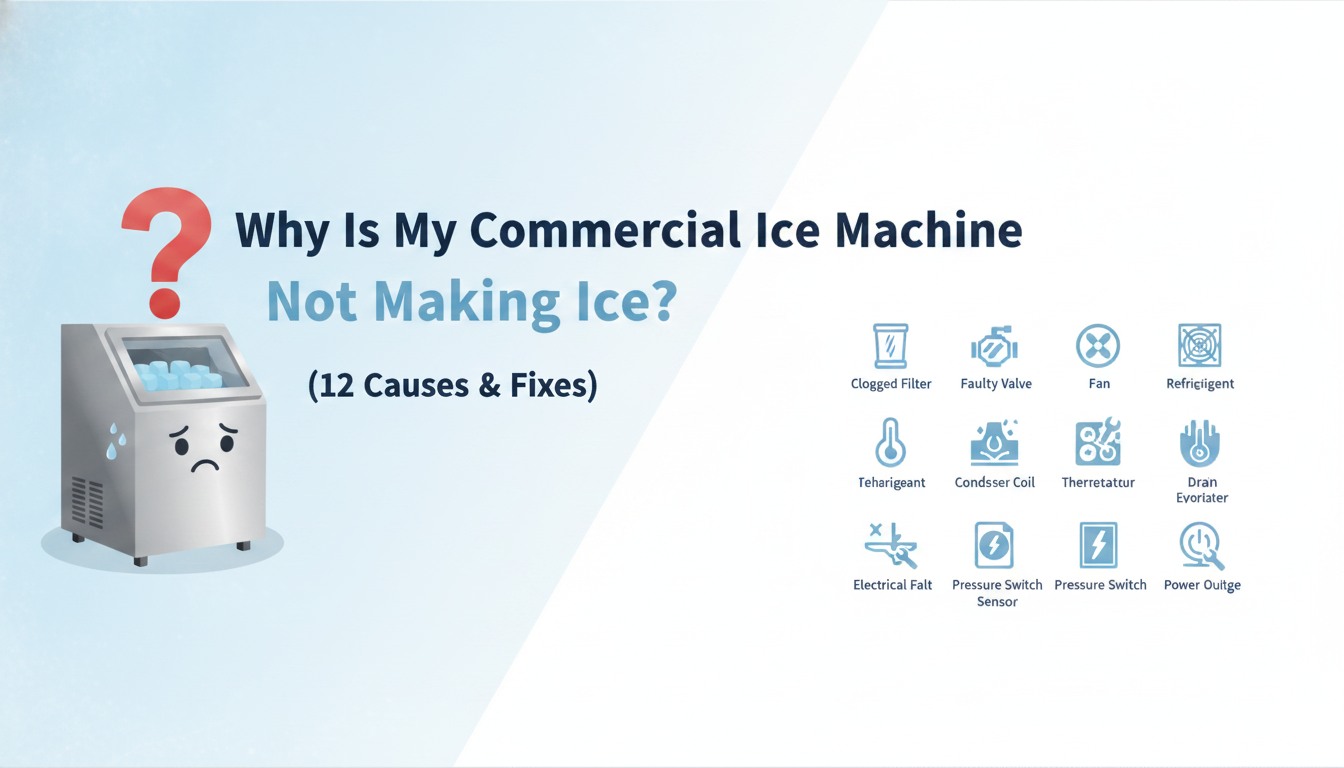

Your commercial ice machine just stopped — and the bar opens in two hours. For restaurant owners and bar managers in Houston, a broken ice machine isn’t an inconvenience; it’s a revenue crisis. Ice is the backbone of every drink you serve, every cooler you pack, every bag of cubed profit you sell. Before you panic, read this guide. We’ve broken down the 12 most common reasons commercial ice machines stop making ice — and what you can realistically do about each one.
Quick Check First — Before You Call Anyone
Run through these basics before diving deeper. Many service calls turn out to be simple oversights:
• Power supply: Is the machine plugged in? Has a breaker tripped? Reset it and wait 10 minutes.
• Water supply: Is the water line valve fully open? Low water pressure (below 20 PSI) will stop ice production cold.
• Air filter: A clogged filter restricts airflow and causes the machine to shut down. Clean or replace it.
• Room temperature: If your kitchen or storage area is above 100°F — common in Houston summers — the machine may be overheating and throttling production.
• Bin full sensor: The ice bin sensor may be tripped or stuck. Empty the bin partially and see if production resumes.
If none of these fix it, you’re likely dealing with one of the 12 causes below.
12 Reasons Your Commercial Ice Machine Stopped Making Ice
1. Clogged or Dirty Air Filter / Condenser Coil
This is the #1 culprit in Houston kitchens. Grease-laden air coats condenser coils over time, reducing heat exchange efficiency. The machine overheats, trips its safety sensor, and stops producing ice. Clean coils every 30–90 days depending on your kitchen environment.
2. Low or Blocked Water Supply
The machine needs a steady 20–60 PSI water supply. Kinked lines, partially closed shut-off valves, or municipal supply fluctuations can all reduce flow enough to halt production. Check the inline water filter — a clogged filter is a very common culprit that’s easy to overlook.
3. Refrigerant Leak
If your machine is running but producing little or no ice, a refrigerant leak is a strong possibility. You may notice the evaporator plate is partially frosted or warm to the touch. Refrigerant handling requires EPA-certified technicians — do not attempt to add refrigerant yourself.
4. Faulty Water Inlet Valve
The water inlet valve controls water flow into the evaporator. If it’s stuck closed or has failed electrically, no water reaches the freeze cycle. This is a moderate repair — the valve is usually replaceable in under an hour by a qualified tech.
5. Broken Water Pump
In many ice machine designs, a pump circulates water over the evaporator plate continuously. A failed pump means water isn’t reaching the freezing surface. You may hear the machine running normally but see zero ice output. Listen for unusual pump noises as an early warning sign.
6. Malfunctioning Thermostat or Thermistor
The thermistor (temperature sensor) tells the control board when the ice slab has reached the correct thickness and is ready to harvest. A faulty sensor causes either premature harvesting (thin, watery ice) or no harvesting at all (machine locks up mid-cycle).
7. Ice Thickness Sensor Problem
Separate from the thermistor, the ice thickness sensor on many Hoshizaki and Scotsman models directly measures ice slab depth using a probe. Mineral scale buildup on this probe is common in Houston’s hard water environment. Clean or replace it as part of routine maintenance.
8. Control Board Failure
The control board is the brain of your ice machine. Surges, moisture damage, and age can all cause board failure. Symptoms include erratic behavior, fault codes, or the machine simply not responding to any inputs. Board replacement is one of the pricier repairs — weigh it against the machine’s age before committing.
9. Harvest Cycle Not Completing
During harvest, hot refrigerant gas is routed to the evaporator to loosen ice slabs. If the hot gas valve is faulty, or if the harvest temperature isn’t reached, ice won’t release. The machine keeps cycling without ever dropping ice into the bin.
10. Compressor Failure
The compressor is the heart of your refrigeration system. If it’s failed, the machine runs but produces no cooling. Compressor replacement is expensive — often $600–$1,200 in parts alone. For machines over 8 years old, compare repair cost against replacement value before proceeding.
11. Ambient Temperature Too High (Houston Summer Factor)
This one is specific to Houston operators. Air-cooled ice machines are rated for ambient temperatures up to 90–100°F depending on the model. During Houston summers, kitchen temps routinely exceed this. The machine reduces output — or shuts down entirely — as a self-protection measure. Consider upgrading to a water-cooled or remote condenser unit if this is a recurring issue.
12. Mineral Scale Buildup on Evaporator Plates
Houston’s water is notoriously hard. Calcium and magnesium deposits accumulate on evaporator plates, reducing surface contact with water and dramatically slowing ice production. Regular descaling with approved nickel-safe ice machine cleaner is essential — every 3–6 months in this market.
Which Problems Can You Fix Yourself vs. Call a Tech?
DIY-friendly: air filter cleaning, water filter replacement, checking water pressure, clearing bin sensor, descaling with approved cleaner.
Call a technician: refrigerant issues, compressor failure, control board replacement, water inlet valve, internal pump failure, harvest valve problems. These involve refrigerant certification, electrical work, or component sourcing that requires a professional.
How to Prevent Ice Machine Problems — Maintenance Tips
• Clean air filter monthly in high-grease kitchen environments
• Replace inline water filter every 6 months
• Descale evaporator plates every 3–6 months (use nickel-safe cleaner)
• Schedule a professional deep-clean and inspection annually
• Install a water softener or filtration system if scale is a recurring issue
• Keep the area around the machine clear — minimum 6 inches of airflow on all sides
Need Same-Day Ice Machine Repair in Houston?
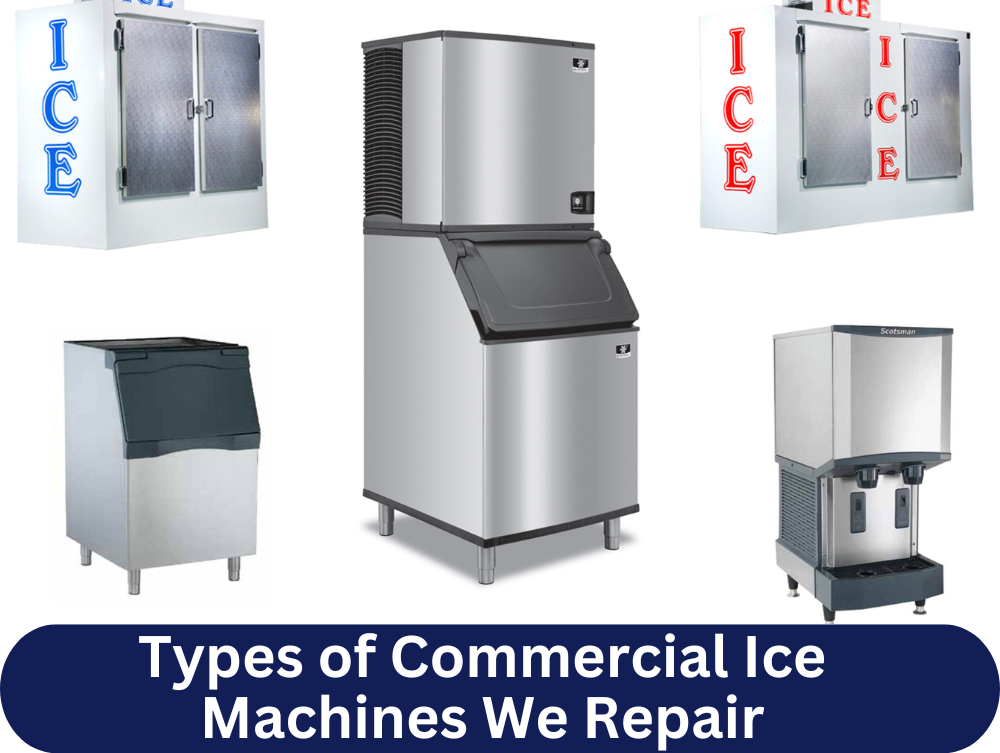
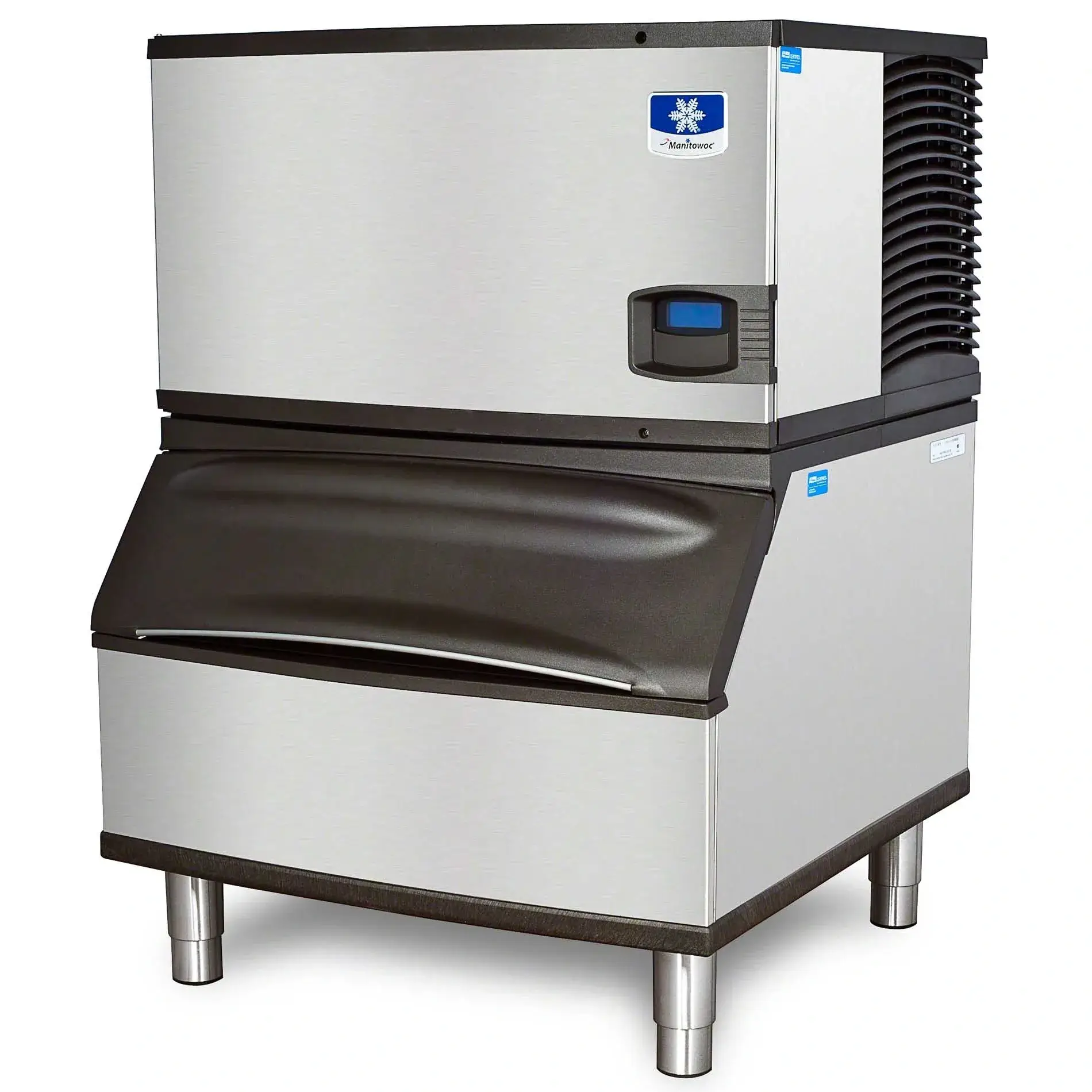
When your ice machine goes down during a shift, you need a technician who stocks parts for Hoshizaki, Scotsman, Manitowoc, and Ice-O-Matic — and who can be on-site fast. Cool Results Commercial Refrigeration serves the Houston metro area with same-day emergency service.
Call us now or visit our Ice Machine Repair Houston page to book your service call. We diagnose the problem upfront, provide transparent pricing, and get your machine back in production — fast.
FAQ’s On Ice Machine Repair in Houston
1. How long can a commercial ice machine go without maintenance?
Ideally, never more than 6 months without a professional service. In Houston’s heat and hard water environment, quarterly check-ups are recommended for high-volume operations.
2. Can I add refrigerant to my ice machine myself?
No. Refrigerant handling requires EPA Section 608 certification. Illegal DIY refrigerant work can void warranties and result in federal fines.
3. My ice machine is making cloudy ice — is that a problem?
Cloudy ice usually indicates mineral buildup or water filtration issues. It’s not immediately dangerous but signals that descaling is overdue.
4. How do I know if I should repair or replace my commercial ice machine?
A common rule of thumb: if the repair cost exceeds 50% of the machine’s current replacement value and the unit is over 7 years old, replacement is often the smarter financial decision.
5. Does Cool Results offer ice machine maintenance contracts in Houston?
Yes — we offer monthly, quarterly, and annual maintenance plans tailored to your business volume and machine type.