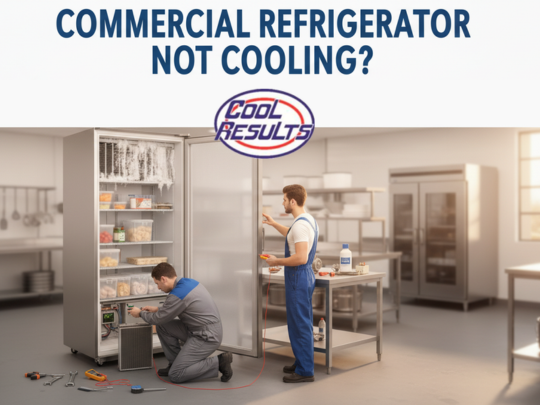

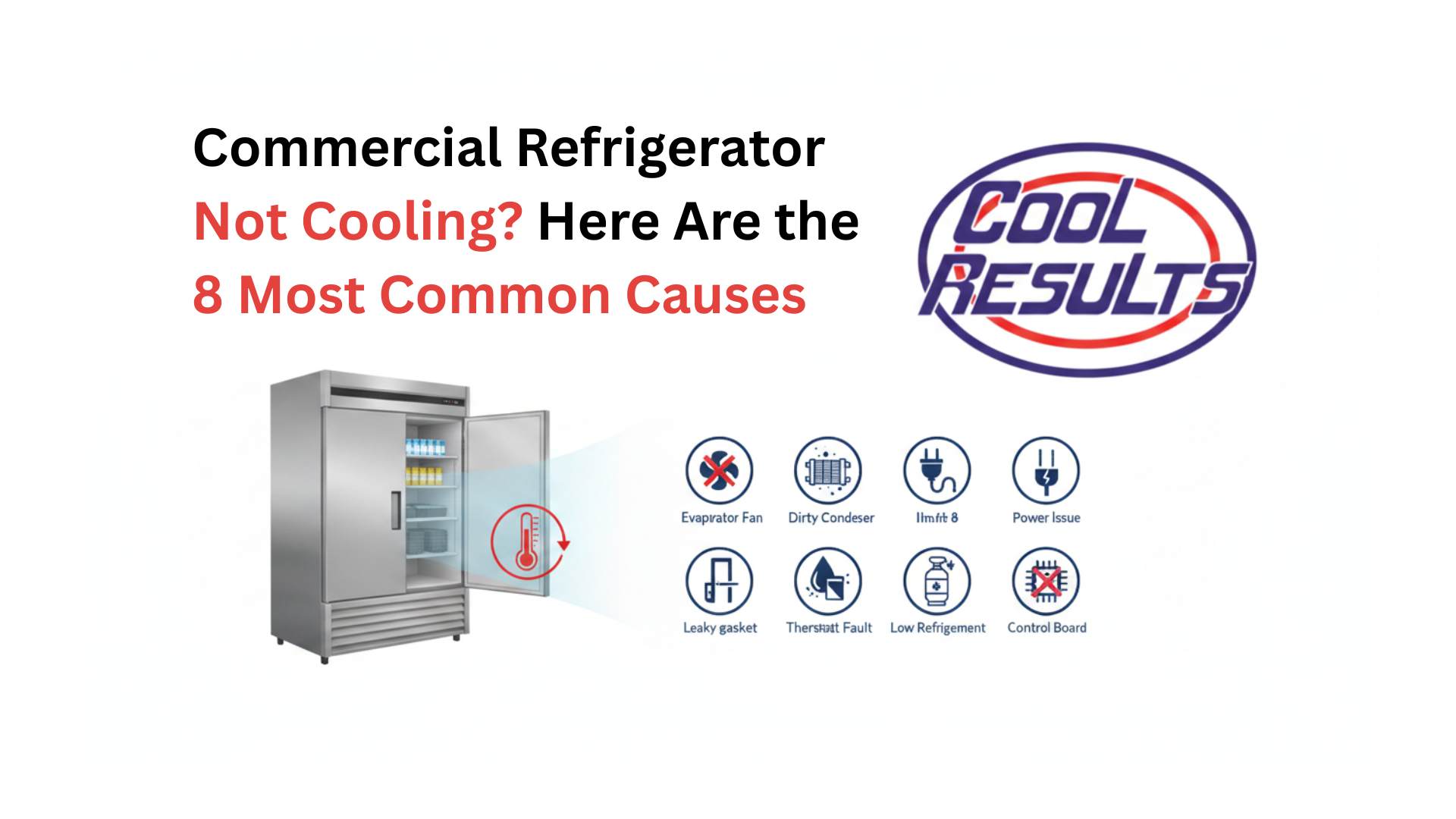
A commercial refrigerator that isn’t cooling is more than a mechanical problem — it’s a food safety emergency. In Houston, where health inspections are thorough and ambient temperatures are high, a warm walk-in or reach-in can mean spoiled inventory, failed inspections, and temporary shutdown. Here are the 8 most common reasons commercial refrigerators stop cooling, and what to do about each.
Quick Diagnostic Steps
Before concluding there’s a serious mechanical issue, work through these checks:
• Verify the thermostat is set correctly (not accidentally bumped to a warmer setting)
• Check that the power cord is secure and the circuit breaker hasn’t tripped
• Inspect door gaskets — even a small gap allows warm air to flood in
• Confirm the evaporator fan is running — open the interior panel if necessary
• Note any error codes on the display panel and look them up in the manual
If the unit passed all of the above, you’re likely dealing with one of the following:
8 Common Causes of a Commercial Refrigerator Not Cooling
1. Dirty or Blocked Condenser Coils
Condenser coils release heat from the refrigerant. When coated with dust, grease, and debris — common in commercial kitchen environments — they can’t shed heat efficiently. The result is a refrigerator that runs constantly but can’t reach target temperature. Clean coils monthly in heavy-use kitchens.
2. Low Refrigerant (Refrigerant Leak)
A low refrigerant charge means the system can’t transfer heat effectively. Signs include: ice forming in unusual locations, longer-than-normal run cycles, warm interior despite compressor running, and hissing sounds near refrigerant lines. A certified HVAC/R technician must locate the leak, repair it, and recharge the system.
3. Evaporator Fan Motor Failure
The evaporator fan circulates cold air throughout the cabinet. When it fails, the evaporator coil gets cold but that cold air never reaches your product. Check if the fan is spinning when the door is closed (use the door switch bypass). A failed fan motor is a relatively affordable repair that makes an immediate difference.
4. Thermostat or Temperature Control Problem
A faulty thermostat may tell the compressor to shut off before the target temperature is reached, or it may fail to signal cooling at all. In digital control systems, a sensor failure can produce similar symptoms. Replacing a thermostat or sensor is generally a low-to-mid cost repair.
5. Door Gasket Failure
Walk-in and reach-in refrigerators in busy kitchens take a beating. Gaskets crack, tear, or simply compress over time and lose their seal. Warm humid air infiltrates the cabinet, making the system work overtime and driving up your energy bill. Gasket replacement is inexpensive and dramatically improves performance.
6. Compressor Failure
The compressor is the engine of your refrigeration system. If it fails, there’s no refrigeration at all. Warning signs include: unit running but not cooling, clicking sounds when it tries to start, or complete silence. Compressor replacement is one of the most expensive refrigeration repairs — factor in age and replacement cost before committing.
7. Refrigerant Line Blockage or Restriction
Moisture contamination, oil buildup, or a failed drier can block refrigerant flow. This creates a restriction in the system that prevents normal operation. Technicians detect this with temperature and pressure readings across the system. Flushing the system and replacing the filter-drier typically resolves it.
8. Blocked Airflow Inside the Cabinet
Overstocking a refrigerator blocks the air channels between shelves, preventing cold air from circulating properly. This isn’t a mechanical failure — it’s an operational issue. Hot spots develop, and product near the center warms even while product near the coils stays cold. Follow the manufacturer’s load guidelines and leave airflow clearance on all sides.
When to Call a Professional
If your quick diagnostic checks didn’t find the problem, call a certified commercial refrigeration technician. Refrigerant work requires EPA certification. Compressor and electrical diagnosis requires specialized tools. Attempting these repairs without training risks making the problem worse — or worse, voiding your equipment warranty.
In Houston’s climate, every hour your refrigerator isn’t cooling is an hour of potential inventory loss. Beef, seafood, dairy, and prepared foods can enter the danger zone (above 40°F) in as little as two hours.
Commercial Refrigerator Repair in Houston — Cool Results
Cool Results specializes in commercial refrigeration repair across the Houston metro area. We service walk-in coolers, reach-in refrigerators, prep tables, and display cases from all major brands. Our technicians carry common parts on their vehicles for same-visit repairs. Call us for same-day service on urgent breakdowns — because your inventory can’t wait.