
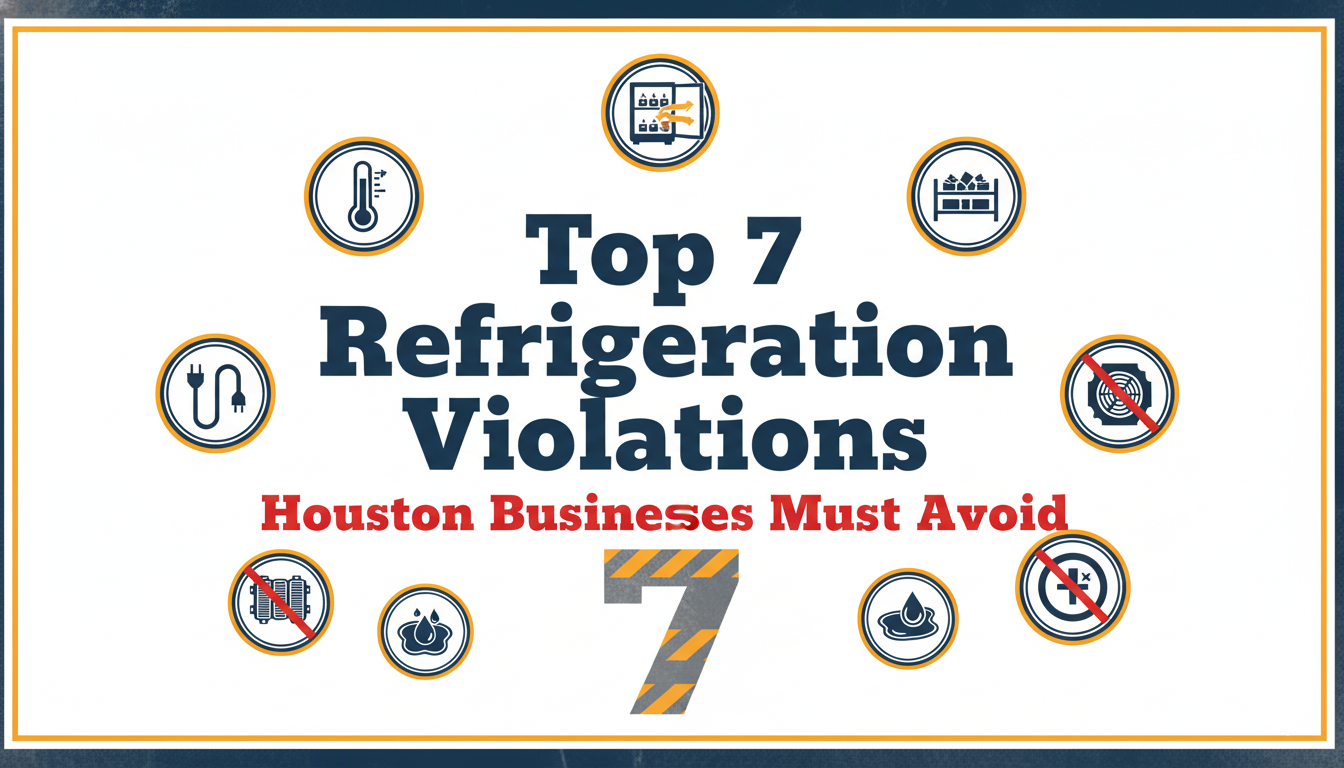
Health inspections in Houston are getting stricter, and one of the most common areas where restaurants fail is refrigeration.
From improper storage temperatures to dirty ice machines, even small mistakes can lead to violations, fines, or worse, temporary shutdowns. The reality is that most of these issues are preventable if you know what to look for.
That’s why understanding commercial refrigeration Houston standards is critical for any food business. Whether you run a restaurant, café, or grocery store, staying compliant protects your customers, your reputation, and your bottom line.
Let’s break down the top violations and how to avoid them.
Improper Temperature Holding (The #1 Violation)
Temperature control is the foundation of food safety and the most common issue inspectors find.
What inspectors look for:
- Cold food held at 41°F or below
- Frozen items stored at 0°F or below
- No temperature fluctuations during service
Common problems:
- Cooler temperature issues due to faulty thermostats
- Overloaded walk-in units blocking airflow
- Doors left open during busy hours
Failing this can immediately flag your commercial refrigeration Houston system as non-compliant.
How to fix it:
- Monitor temperatures multiple times daily
- Avoid overstocking units
- Schedule routine maintenance
Ice Contamination Issues
Many restaurant owners assume ice is safe, but inspectors treat it as food.
If your ice is contaminated, it’s a direct violation.
Common causes:
- Dirty ice bins
- Staff handling ice improperly
- Cross-contamination from nearby food
This is where proper ice machine sanitation becomes critical.
What inspectors check:
- Cleanliness of ice storage bins
- Proper scooping methods
- No direct hand contact
Ignoring this can quickly put your commercial refrigeration Houston setup at risk during inspections.
Mold Inside Ice Machines
This is one of the most overlooked but serious violations.
Ice machines create a moist environment, which is perfect for mold growth.
Signs of mold buildup:
- Black or pink slime inside the machine
- Musty odor from the ice
- Cloudy or bad-tasting ice
Regular ice machine sanitation is required to stay compliant with restaurant refrigeration compliance standards.
Prevention tips:
- Clean machines weekly (or as required)
- Schedule deep professional cleaning
- Replace filters regularly
A neglected ice machine can fail your inspection instantly, even if everything else is perfect.
Thermometer Calibration Mistakes
Many businesses rely on thermometers but forget to calibrate them.
This leads to inaccurate readings and potential violations.
Why this matters:
- You may think your unit is safe, but it’s not
- Inspectors use calibrated tools for verification
- Even a small deviation can fail inspection
This directly impacts freezer temperature standards and overall commercial refrigeration Houston compliance.
Best practices:
- Calibrate thermometers weekly
- Use ice-water method for accuracy
- Replace faulty devices immediately
Cooler Temperature Issues During Peak Hours
Even if your system works fine during off-hours, it can fail during busy periods.
Why this happens:
- Frequent door openings
- Overloading with hot food
- Poor airflow inside the unit
These cooler temperature issues are commonly flagged during inspections.
How to avoid it:
- Use prep coolers for high-traffic areas
- Avoid placing hot items directly inside
- Train staff on proper loading practices
Maintaining stable temps is essential for commercial refrigeration Houston compliance.
Failure to Meet Freezer Temperature Standards
Freezers must maintain strict temperature levels to prevent bacterial growth.
Required standards:
- Maintain 0°F or lower at all times
- No thawing and refreezing cycles
- Consistent internal temperature
Violating freezer temperature standards is a major red flag during inspections.
Common issues:
- Faulty door seals
- Ice buildup is affecting airflow
- Aging equipment
Routine checks ensure your commercial refrigeration Houston systems stay within safe limits.
Lack of Preventive Maintenance (Leading to Violations)
Many violations happen not because of one issue, but because of neglect over time.
Common signs:
- Strange noises from compressors
- Inconsistent cooling
- Frequent system resets
Without proper maintenance, your equipment will eventually fail inspection.
What inspectors notice:
- Dirty condenser coils
- Poor equipment condition
- Lack of service records
Staying compliant with restaurant refrigeration compliance requires consistent upkeep.
How to Avoid Costly Shutdowns in Houston
A failed inspection doesn’t just mean a warning; it can mean lost revenue.
Here are practical Houston health inspection tips:
- Keep daily temperature logs
- Train staff on food-safety protocols
- Clean equipment on a strict schedule
- Schedule professional inspections quarterly
- Address issues immediately
Proactive management reduces the risk of violations and keeps your commercial refrigeration Houston systems running smoothly.
Quick Comparison: Compliant vs Non-Compliant Systems
| Area | Compliant Setup | Non-Compliant Setup |
| Temperature | Stable at 41°F or below | Fluctuating temps |
| Ice Machine | Clean, sanitized | Mold buildup |
| Thermometers | Calibrated weekly | Inaccurate readings |
| Freezer | Maintains 0°F | Thaw/refreeze cycles |
| Maintenance | Regular servicing | Neglected equipment |
Why Commercial Refrigeration Compliance Matters
Beyond passing inspections, compliance protects your business in multiple ways:
- Prevents foodborne illnesses
- Protects your reputation
- Reduces costly repairs
- Ensures smooth operations
Strong commercial refrigeration Houston practices aren’t just about rules; they’re about long-term success.
FAQ
1. What temperature should a commercial cooler be in Houston?
Coolers must maintain 41°F or below to meet safety standards.
2. How often should ice machines be cleaned?
Ice machines should be cleaned weekly and deep-cleaned regularly for proper ice machine sanitation.
3. What happens if I fail a health inspection?
You may receive fines, warnings, or even temporary closure depending on the severity.
4. How do I fix cooler temperature issues quickly?
Check airflow, door seals, and avoid overloading. Call a professional if needed.
5. Are freezer temperature standards strictly enforced?
Yes. Freezers must maintain 0°F or lower consistently.
Conclusion: Stay Ahead of Violations Before Inspectors Arrive
Health code violations related to refrigeration are one of the biggest risks for food businesses in Houston, but they’re also some of the easiest to prevent.
By understanding these common issues and taking proactive steps, you can avoid fines, protect your customers, and keep your operations running smoothly.
Strong commercial refrigeration Houston practices aren’t just about passing inspections; they’re about running a smarter, safer business.
Visit: https://cool-results.com/